Evidence first. Workflow around it.
Plenty of cameras can capture a finish. What decides a race day is everything after the capture: the review, the decision, the approval, the publication — and what happens when something goes wrong. We built all of it.
One race takes the system through six stations.
Here is each one, and why it exists.
Setup that forgives
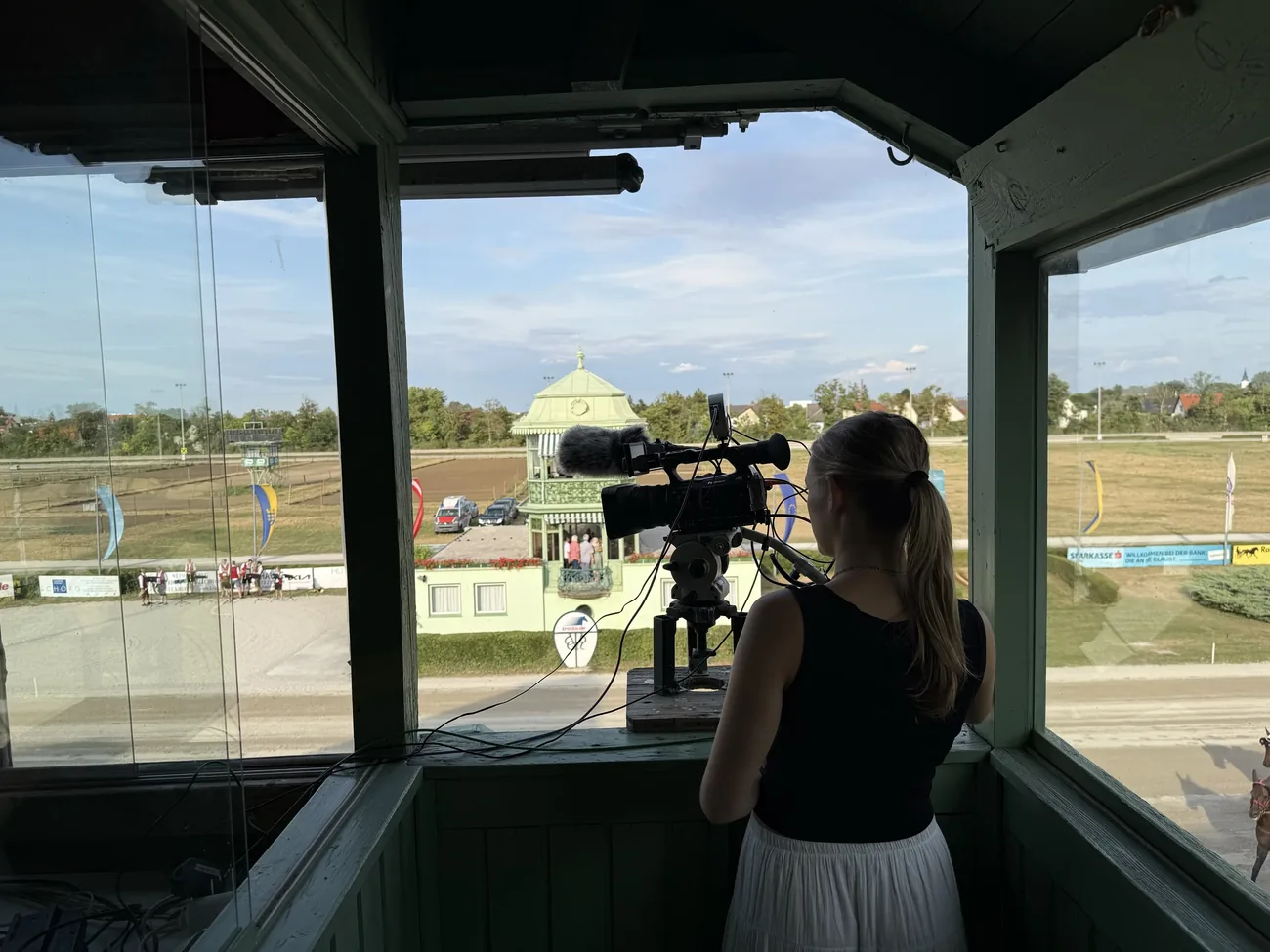
Alignment tools, remote and , sensible defaults — built for the person setting up at 6 a.m., not for the person who built the camera. Aim, focus, and iris are adjusted from the laptop, so nobody climbs a ladder to nudge a perfectly aligned camera out of alignment.
The setup philosophy that saves money all day: set the aperture once — for the depth of field your track needs — and never touch it again. When the light changes, the answer is the scan rate, not the optics. That’s why a simple fixed lens does the job; the motorized lens is a convenience, not a requirement. On the glass itself: the camera is built around standard C and CS mounts — the industrial lens world’s huge, affordable catalog — and supports the current generation of motorized control: Computar LensConnect USB lenses, plug and play. We came from thirty years of video production; the lens was the center of this design, not the afterthought.
Capture you can defend
Up to at of line resolution — the scan rate matched to how fast real races cross a real line. Timing runs on a temperature-compensated oscillator (TCXO), with optional holding it to satellite time: steady on the ground, anchored to the sky.
And every finish is recorded — the sensor’s original measurement, kept as the source. A too-dark image from a rushed morning stays recoverable; a protested result is answered with source data, not a processed interpretation. JPEG exists as an export you generate from the RAW, never as the ceiling.
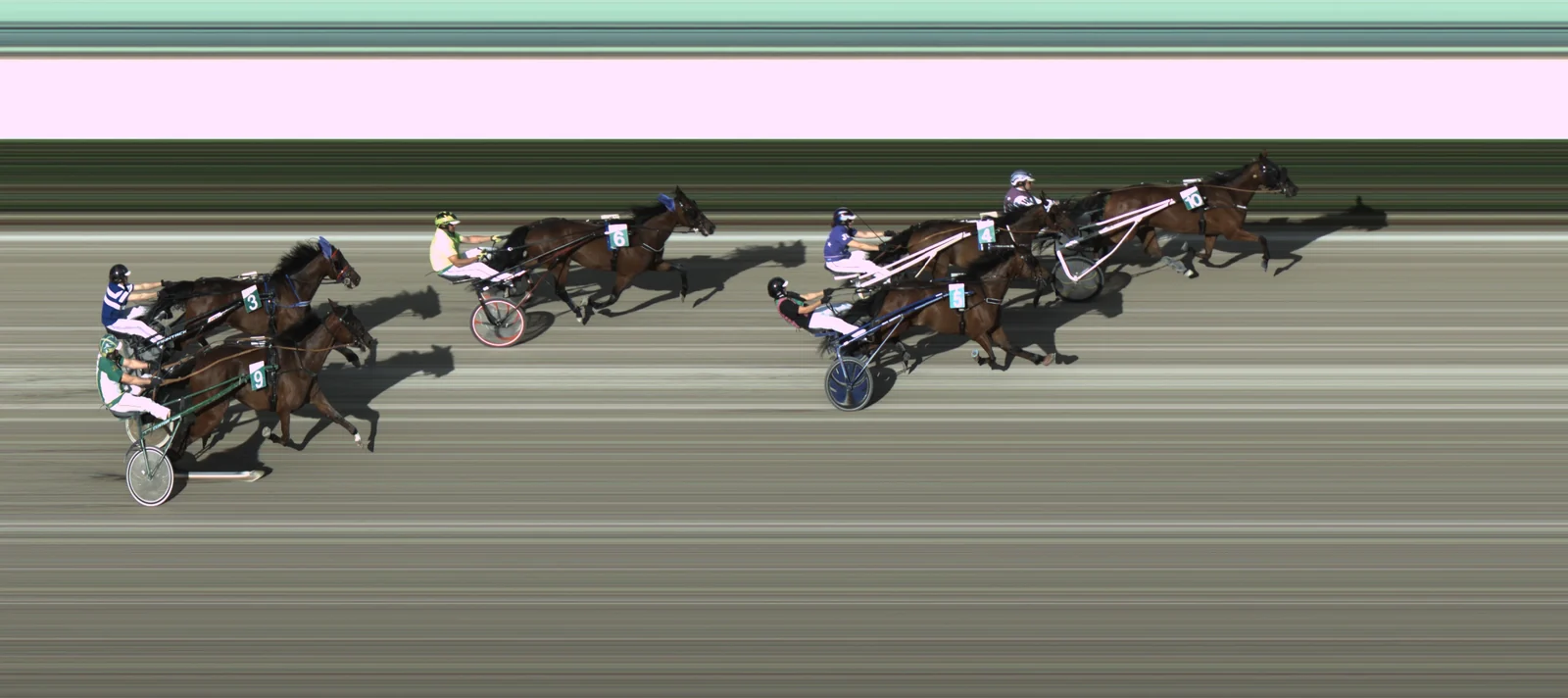
Download the full-field strip — judge it yourself


The same finish, 10,475 × 2,048 px, the complete field across the line — not resized, not retouched. WebP for a quick look; PNG and TIF lossless for measuring at 100 %. And the DNG is the camera’s RAW original — the sensor’s own measurements, the file every other version on this page was exported from. Open it in any RAW editor, push the exposure, and check our claims yourself. We know of no other photo finish system that hands you this file.
Review at race speed
The operator dashboard shows the race, the clock, the camera state, and the recording state at once — built by people who got tired of guessing whether everything was still armed. watches the line as a second pair of eyes; pre-roll keeps the moments from just before any trigger, manual or automatic. And because the recording is RAW, the viewer’s aspect ratio correction shows every race in true proportions — whatever scan rate the light demanded. Any factor, reversible, per race.

A second pair of eyes, instantly
The commentator view mirrors the evidence, not the operator’s desktop. The person who knows the race best sees the finish the moment it exists — and becomes your fastest double-check, exactly when the crowd wants the result.
Approval that moves
The result flows from decision to publication without re-typing — because we learned on our own race days that the slow part was never the camera, it was everything after. Results wait visibly for ; , streams, and websites receive only what an official has approved. Nothing unfinished reaches the public.
A net under everything
The lives in the camera itself, independent of the operator’s computer — unplug the laptop cable mid-race and the camera keeps recording. Motion detection keeps that on-board record organized around real movement at the line, so a missing finish is found in moments, not somewhere in a day-long haystack of footage. Evidence is written to storage as the race happens — Stop seals the recording, it doesn’t create it.° After thousands of races, we don’t trust perfect days. Neither should you.
The numbers, and what each one is for.
Specs no one explains are specs no one can check — every row opens the explanation.
| up to 5,000 lines/s — matched to racing speeds; higher-rate builds on request | |
| 2,064 px — the number that works like megapixels | |
| RAW-first, continuous; JPEG at export — the original stays the original | |
| continuous second recording, in the camera — a missed button ≠ a missed finish | |
| TCXO, optional GPS module — steady on the ground, anchored to the sky | |
| wired trigger on the camera — no timing box required to operate | |
| scoreboard outputs, Ethernet — most boards direct from the camera° | |
| lens + gear head from software — nobody climbs the pole | |
| Connectivity | Ethernet, PoE, USB — one cable to the laptop° |
Sensor-agnostic by design. Nobody in this market manufactures sensors — every timing camera, ours included, is built around silicon from the same few specialist makers that supply the whole camera industry. We treat that as a design principle instead of a secret: our architecture doesn’t depend on one sensor. Need something unusual — an extreme scan rate, a sensor you already trust? Tell us the requirement; you’ll get an offer, not a “no.” (Bring light. Physics still applies.)
Two horses. One line. No doubt.
Inspect the image before you trust the claim. Below is a full-resolution strip from a live race day — zoom in as far as you like, then download the same file our judges would work with. Every system looks good in a brochure thumbnail; resolution has nowhere to hide at 100%.
Low light is a physics problem, not a brochure problem. Thousands of exposures per second means a fraction of a millisecond of light for each. No brand escapes that arithmetic — including us. What we promise instead of magic: the matched scan rate keeps exposures as long as your sport allows, gain enters last, and . And if your venue is the real problem, we’ll say so and help you light the line.
Yours to wire in.
Your production, your rules — we stopped accepting closed systems, so we didn’t build one.
- — results with approval status flow to scoring, websites, and displays; no retyping.
- — race-day workflows as repeatable commands; twenty races prepared by one checked script.
- (via Bitfocus Companion) — frequent actions on physical buttons.
- — your dashboard doesn’t exist yet; that’s the feature. Role-based views over one shared race record.
- / — second angles and separate desks, one synchronized truth.
- — approved results straight into broadcast graphics.°
- — most driven directly over Ethernet from the camera.°
And because the interfaces are documented, they’re AI-ready. An AI assistant can read the API and CLI documentation and help run the system — explain a setting, prepare a race day, walk a returning operator through setup — strictly within the permissions you grant, with a human always signing the results. Automation can also be locked out entirely. The doors are built; the keys are yours.
Items in this section are part of Lion Timing Advanced.
In development: zero-test support — the referee’s ritual of firing the start gun on the finish line to prove the whole chain reads 0.000 — is in development as a built-in test mode. We publish what’s shipping and what isn’t; ask us for the current state in the demo.
EUR 5,990. On the website. On purpose.
Camera, software, essential workflow, onboarding — the founding price, public, rising to EUR 7,990 when the founding batch is gone. What’s included and what’s quoted separately is spelled out, in writing, before you commit.