
Source capture
Record the finish as RAW-first source evidence before review/export decisions are made.
Raw evidence
RAW-first direction keeps more source image information available before the operator creates review and export images. That helps when light, setup, or a close finish needs careful review.
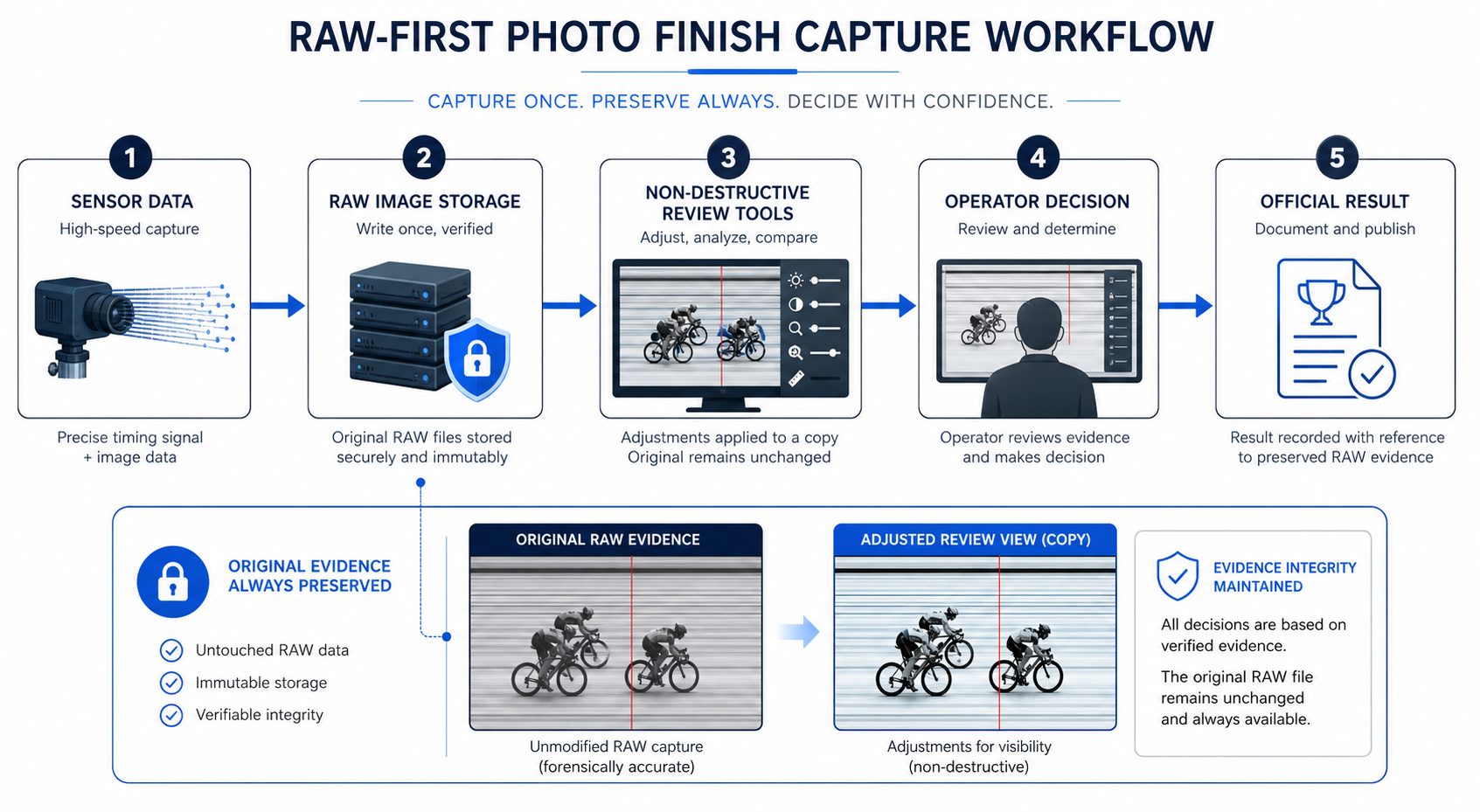
RAW-first evidence path
The buyer idea is simple: capture useful source data, then review and export responsibly.
Record the finish as RAW-first source evidence before review/export decisions are made.
Use brightness, white balance, contrast, and saturation to inspect the image.
Create shareable review images after the operator understands what needs to be shown.
Use the source and backup story to discuss what happened if the result is questioned.
Source evidence
RAW is the source measurement from the sensor. JPEG is useful for sharing, reports, and quick review, but it is a rendering made from the source.
When the finish image is too dark, RAW gives the operator more room to inspect useful detail before creating an export.
When sun, clouds, or floodlights shift, review adjustments can be made from the source data instead of accepting one baked-in image.
When the deciding edge is disputed, source evidence is stronger than a compressed summary of what the camera decided to keep.
Why it matters
You defend it with the source. The moment a camera compresses, your data becomes its opinion; RAW-first recording keeps the original available before JPEG export.
Lion Timing records RAW-first/source data, then creates JPEG exports for sharing when the operator needs them.
Brightness, color, and exposure corrections can support inspection without pretending the exported view is the original file.
RAW does not defeat poor light. Bad lighting still needs lighting, and gain can add noise along with signal.
Difficult light
RAW preserves more of what the sensor captured and can help inspect a difficult or dark capture. It is not a guarantee that every bad image can be repaired; bad lighting still needs lighting.
Honest boundary
RAW-first capture can provide more flexibility before export, especially when light or setup is imperfect. It should not be presented as a guarantee that every bad image can be fully repaired.